
A Beginner’s Guide to Ski Protection: What Gear Helps You Feel Safer on the Snow
For many beginners, the hardest part of skiing is not only learning how to turn, stop, or keep your balance. It is learning how to feel comfortable enough to keep trying.
Your first day on the snow can be exciting, but it can also feel overwhelming. Your body is moving in unfamiliar ways, the ground feels slippery, the air is cold, and even a simple fall can feel much harder than expected.
At the same time, you may be thinking about where to put your weight, how to slow down, how to avoid other people, and whether your next fall is going to hurt.
That is why ski protection matters.
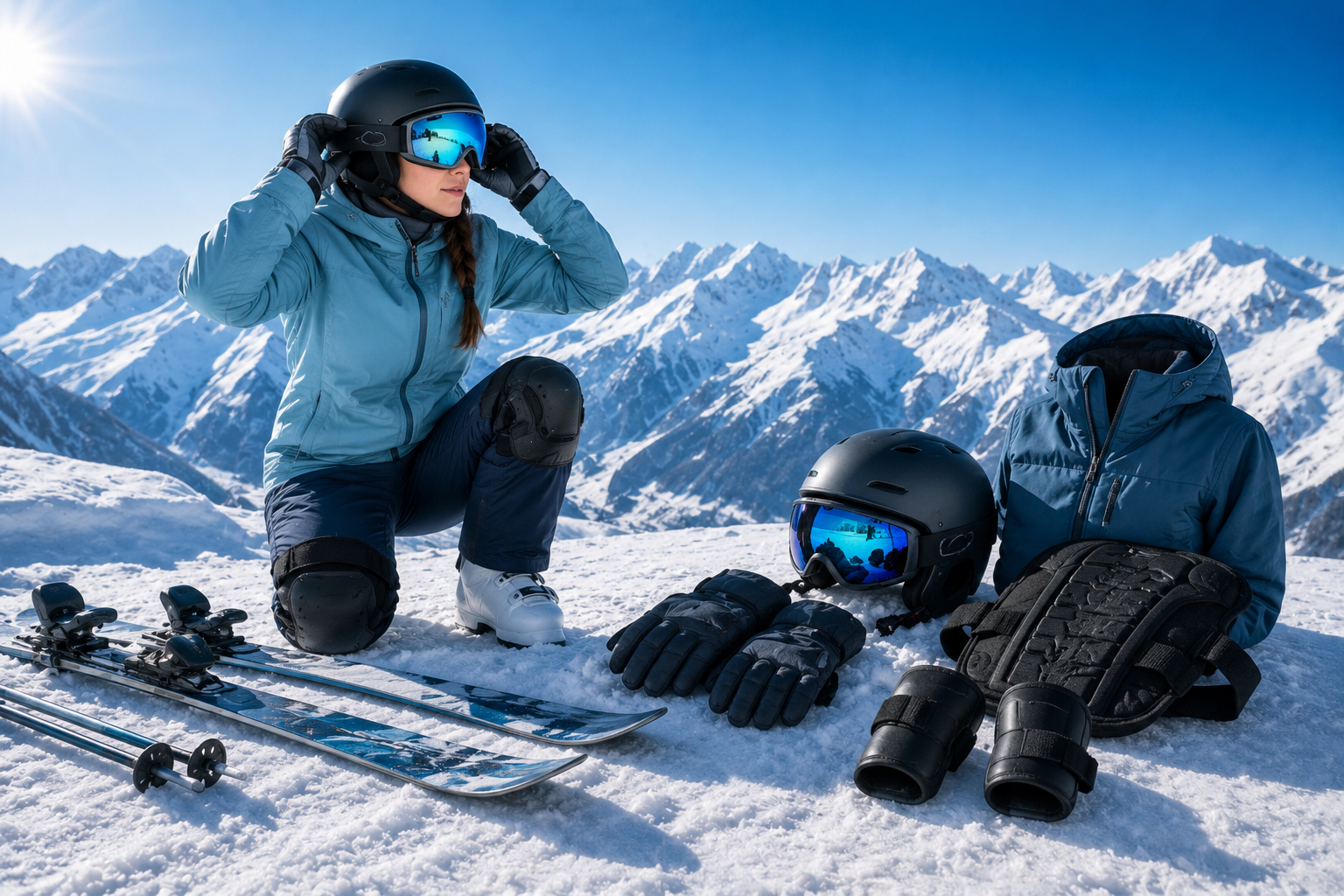
Protective gear cannot remove every risk, and it should never replace proper instruction, safe speed control, awareness, or responsible skiing. But the right equipment can help you feel better prepared for the mountain, reduce some of the discomfort associated with beginner falls, and make the learning process feel less intimidating.
Why Beginners Need Protection on the Snow
Falling is a normal part of learning to ski or snowboard.
A beginner skier may lose balance while learning to stop. A snowboarder may fall backward and land on the hips or tailbone. Someone may stumble while getting off the lift, while children often fall repeatedly while practicing on gentle terrain.
Protection is not about pretending that winter sports are risk-free.
It is about creating a more comfortable starting point so that fear does not become the main thing you remember about your first day on the mountain.
A good beginner setup usually combines three things:
- Appropriate safety equipment
- Clothing that helps keep you warm and comfortable
- Additional cushioning for areas that frequently contact the snow
You do not need to buy every possible piece of equipment before your first lesson. It is usually more useful to understand where you are likely to feel uncomfortable and build your setup around those needs.
Helmet: The First Piece of Protection to Consider
A proper snow-sports helmet is one of the first pieces of protective equipment beginners should consider.
Falls do not only happen at high speeds or on advanced terrain. They can happen on beginner slopes, around lifts, on hard-packed snow, or simply while learning how to balance.
A helmet should fit securely without moving excessively when you turn or shake your head.
When choosing one, pay attention to:
- Secure and comfortable fit
- Compatibility with your goggles
- Appropriate ventilation
- Suitability for skiing or snowboarding
- Overall condition
- No significant damage from previous impacts
A helmet does not make skiing risk-free, but it provides an important layer of protection before you head onto the slope.
Goggles: Better Vision Can Mean More Confidence
Goggles are sometimes treated as an optional comfort item, but visibility is an important part of feeling comfortable on the mountain.
Snow, reflected sunlight, wind, ice particles, falling snow, and rapidly changing light conditions can all make it harder to see clearly.
When your eyes are constantly dealing with cold wind or bright reflected light, it becomes harder to concentrate on what is happening ahead of you. For a beginner who is already thinking about balance, speed, and direction, that extra distraction is something worth reducing.
This is where a well-fitting pair of ski goggles becomes useful.
Ski goggles help create coverage around the eyes while allowing you to focus more comfortably on the terrain in front of you. A secure fit can also reduce gaps where cold air or blowing snow can enter.
When choosing beginner ski goggles, look for:
- A comfortable fit around the face
- Compatibility with your helmet
- Minimal gaps
- Anti-fog features
- A suitable lens for expected conditions
- Wind and snow coverage
- A field of view that does not feel restrictive
Our Ski Goggles give you options for different fits and lens styles, making it easier to choose a pair around the conditions and type of skiing you expect to encounter.
For a beginner, this is one of the more practical upgrades because better eye coverage can make everything from riding a lift to looking down a slope feel more comfortable.
Wrist Guards: Especially Useful for Beginner Snowboarders
Wrist guards are particularly worth considering for beginner snowboarders.
When learning to snowboard, it is natural to instinctively put your hands out during a fall. That can place considerable force on the hands and wrists, especially before balance and edge control improve.
When choosing wrist protection, consider:
- Comfortable fit
- Support around the palm and wrist
- Adjustable fastening
- Compatibility with your gloves
- Enough flexibility for normal hand movement
Wrist guards are generally more common among snowboarders than skiers, but individual preferences and riding styles vary.
Padded Ski Shorts: Extra Cushioning Where Beginners Often Fall
For many first-time snowboarders, one of the biggest surprises is how often the hips and tailbone contact the snow.
Backward falls are especially common while learning how to balance, stop, transition between edges, or stand up.
That is why padded ski shorts can become one of the most useful pieces in a beginner setup.
They are worn underneath your outer ski or snowboard pants and add cushioning around areas such as the hips and tailbone.
Instead of adding another bulky outer piece, the protection stays underneath your normal ski clothing.
This can be particularly useful for:
- First-time snowboarders
- Beginner skiers practicing balance
- Riders concerned about tailbone impact
- Children learning on snow
- Long practice sessions involving repeated falls
Our Padded Shorts add an extra cushioning layer in these high-contact areas while still allowing them to be worn underneath suitable ski clothing.
That can be valuable during the early learning stage because a painful fall does more than hurt for a few minutes. It can make you stiff, hesitant, and less willing to commit to the next movement.
If you know that backward falls are one of your biggest concerns, adding padded shorts before your first few sessions can make repeated practice feel less intimidating.
When choosing a pair, make sure the fit is secure enough to keep the padding in position without making it difficult to bend, sit, squat, or get back up.
Knee Guards: Useful When the Snow Keeps Finding Your Knees
Your knees are constantly working during skiing and snowboarding.
They bend through turns, absorb movement, and help you adjust your balance.
For snowboarders, the knees also frequently contact the snow while fastening bindings, waiting on the slope, getting up, or recovering after a fall.
Beginners can spend much more time kneeling than experienced riders realize.
A knee guard adds cushioning between the knee and the snow, which can make repeated kneeling and minor impacts more comfortable.
Our Knee Pads can be worn underneath suitable snow clothing, giving you an additional protective layer without turning them into a separate bulky outer item.
They can be particularly useful if you want:
- Additional cushioning against hard-packed snow
- More comfort while kneeling
- Support during repeated beginner practice
- Protection underneath ski or snowboard pants
- Less distraction from minor knee impacts
The key is movement. Knee protection should help you feel more comfortable without making your legs feel stiff.
For beginners who repeatedly kneel to adjust snowboard bindings or who tend to fall forward, this is one of those smaller additions that can make an entire practice session easier.
Gloves and Mittens: Cold Hands Can End a Ski Day Early
Cold hands can shorten a ski day very quickly.
Gloves and mittens do more than provide warmth. They also help shield your hands from snow, wind, moisture, and repeated contact with the ground.
Beginners often touch the snow more frequently because they fall, push themselves back up, adjust bindings, or stop and sit while learning.
When choosing gloves or mittens, consider:
- Insulation
- Water resistance
- Secure wrist closure
- Palm grip
- Flexibility
- Compatibility with other protective equipment
Mittens generally provide more shared warmth between the fingers, while gloves provide greater finger independence.
Choose according to the conditions and your personal preference.
Face Coverings and Neck Gaiters: Small Gear, Noticeable Comfort
The face, neck, and ears can be exposed to cold wind and snow for long periods.
This becomes especially noticeable on chairlifts, during windy conditions, or when beginners spend more time standing still between attempts.
A face covering, balaclava, or neck gaiter can help reduce exposure and make cold days more comfortable.
Look for something that is:
- Warm
- Breathable
- Easy to adjust
- Comfortable with a helmet
- Comfortable underneath a jacket collar
Sometimes it is not one major piece of equipment that makes a ski day better. Small improvements in comfort can be enough to help you stay outside longer.
Protection Starts With What You Wear Underneath
Protection is not limited to helmets and padding.
Cold and uncomfortable clothing can also affect the way you ski.
If your body feels cold, damp, or restricted, you may become tense. That can make natural movement more difficult, particularly when you are already concentrating on a new skill.
A simple beginner layering system usually includes:
Base Layer: Worn close to the body.
Mid Layer: Adds insulation when additional warmth is needed.
Outer Layer: Provides coverage against the mountain environment.
Start With a Comfortable Base Layer
Your base layer sits closest to your body, so it affects how the rest of your outfit feels.
You want enough coverage for cold conditions without creating unnecessary bulk underneath your ski clothing.
Our Thermal Underwear works as the foundation of this layering system. Because it sits underneath your outer ski clothing, it allows you to add warmth without relying entirely on one heavy jacket.
This gives you more flexibility when conditions change.
For example, you may feel warm while skiing downhill but noticeably colder when sitting still on a lift. Layering gives you a better way to deal with those changing activity levels than simply wearing one oversized outer layer.
A suitable thermal layer can also work underneath ski pants, jackets, or jumpsuits without changing the overall structure of your snow outfit.
Your Outer Layer Needs to Move With You
An everyday winter coat may work well while walking through a city, but skiing places different demands on clothing.
You are constantly:
- Bending your knees
- Rotating your upper body
- Sitting on lifts
- Standing up from the snow
- Moving through changing weather
- Wearing additional layers underneath
That means your outerwear has to provide coverage without making normal movement unnecessarily difficult.
Ski Jackets: More Flexibility in Your Layering System
A separate ski jacket gives you more control over how you build your outfit.
You can change the layers underneath according to temperature and choose your upper and lower sizes separately.
Our Ski Jackets are useful for riders who prefer:
- Flexible upper-body layering
- A separate jacket-and-pants setup
- Easier adjustment for changing temperatures
- Freedom to combine different sizes
- A more modular ski wardrobe
This setup can be particularly practical for beginners because you may not yet know exactly how much insulation you prefer.
Being able to adjust the layers underneath your jacket gives you room to figure that out over time.
Ski Pants: Leave Room for Movement and Protection
Your lower body works constantly while skiing.
Ski pants need to accommodate knee movement, bending, sitting, and any base or protective layer underneath.
Our Ski Pants allow you to build your lower-body setup separately, which can be especially useful if you want to combine them with thermal underwear, padded shorts, or knee protection.
That gives you greater flexibility to adjust your setup according to the day.
For example, a beginner snowboarder may wear thermal underwear, padded shorts, and ski pants together, while another skier may prefer only a thermal base layer underneath.
Choosing the pieces separately lets you build around your own comfort level rather than forcing everyone into the same combination.
Ski Jumpsuits: A Simpler One-Piece Approach
Not everyone wants to coordinate a separate jacket and pants.
A ski jumpsuit gives you one-piece outer coverage across the upper and lower body.
This can be appealing if you prefer:
- Fewer separate outerwear pieces
- Consistent upper and lower coverage
- An easy outfit to layer over thermal underwear
- A straightforward setup for ski trips
- Less time coordinating a jacket-and-pants combination
Our Ski Jumpsuits provide an alternative for riders who prefer this all-in-one approach.
You can still build thermal layers underneath, but your main outer layer becomes a single piece rather than two separate garments.
For some beginners, keeping the setup simple is an advantage in itself.
What Protection Should Beginners Prioritize First?
You do not necessarily need to buy every piece of gear at once.
Start with the equipment that addresses the biggest needs for your activity, conditions, and comfort level.
A beginner checklist might look like this:
- Ski or snowboard helmet
- Ski goggles
- Warm gloves or mittens
- Suitable thermal base layers
- Ski jacket and ski pants, or a ski jumpsuit
- Padded shorts if you expect frequent backward falls
- Wrist guards for beginner snowboarders
- Knee guards if you want additional cushioning
- Face or neck coverage for cold and windy conditions
The exact order can change depending on whether you ski or snowboard.
A first-time snowboarder worried about repeated backward falls may put padded shorts near the top of the list.
Someone whose eyes are particularly sensitive to wind and reflected snow may prioritize goggles.
If cold is normally what sends you indoors first, improving your thermal and outer layers may make the biggest difference.
The right setup is not about owning the most equipment. It is about solving the problems that are most likely to interfere with your day.
Build Your Setup Around How You Actually Ride
Think about what worries you most before your first few sessions.
If you are worried about visibility, properly fitting ski goggles can help shield your eyes from wind, snow, and bright mountain conditions.
If you are learning to snowboard and are worried about landing backward, padded shorts add cushioning around the hips and tailbone.
If you frequently kneel in the snow, knee pads can give you additional cushioning underneath your outer clothing.
If cold conditions normally make you uncomfortable quickly, start by improving your thermal base layer.
If you want greater flexibility, combine Ski Jackets and Ski Pants and adjust the layers underneath.
If you prefer fewer separate pieces, a Ski Jumpsuit offers a simpler one-piece outerwear setup.
Once you identify your biggest concern, choosing equipment becomes much easier.
Protection Is Also About Confidence
One of the easiest things to overlook is how strongly comfort affects confidence.
When you feel cold, exposed, cannot see comfortably, or are worried about every fall, a beginner slope can feel much harder than it actually is.
When you are wearing a comfortable thermal layer, your outerwear allows you to move, your goggles help shield your eyes, and vulnerable areas have the cushioning you want, you have fewer distractions competing for your attention.
You will probably still fall.
You may still move slowly.
You may still spend plenty of time learning how to stop.
But feeling better prepared can make it easier to continue until something finally clicks.
Maybe it is your first smooth turn.
Maybe it is your first controlled stop.
Maybe it is getting off the lift without panicking.
Or maybe it is simply reaching the bottom of the slope and wanting to go back up again.
Those small moments are often where skiing and snowboarding start becoming fun.
Final Thoughts: Safer, Warmer, and More Ready to Keep Going
Ski protection should not be about covering yourself in equipment because you are afraid of the mountain.
It should be about preparing intelligently for a sport where cold weather, unfamiliar movement, falls, and repeated practice are part of learning.
A helmet helps protect your head.
Goggles help keep wind, snow, and difficult light conditions away from your eyes.
Padded shorts add cushioning around the hips and tailbone.
Knee pads give you another layer between your knees and hard-packed snow.
Thermal underwear provides a foundation for your cold-weather layering system.
Ski jackets and pants give you greater flexibility when combining layers, while a ski jumpsuit offers a simpler one-piece alternative.
None of these products can eliminate every risk.
But when the equipment you choose helps address the specific things making you uncomfortable, you can spend less time thinking about your gear and more time learning how to move on the mountain.
Because the goal is not to feel fearless on your first day.
The goal is to feel prepared enough to begin, comfortable enough to keep learning, and confident enough to want another run.